Chapters
Transcript
What a Cave-In Is
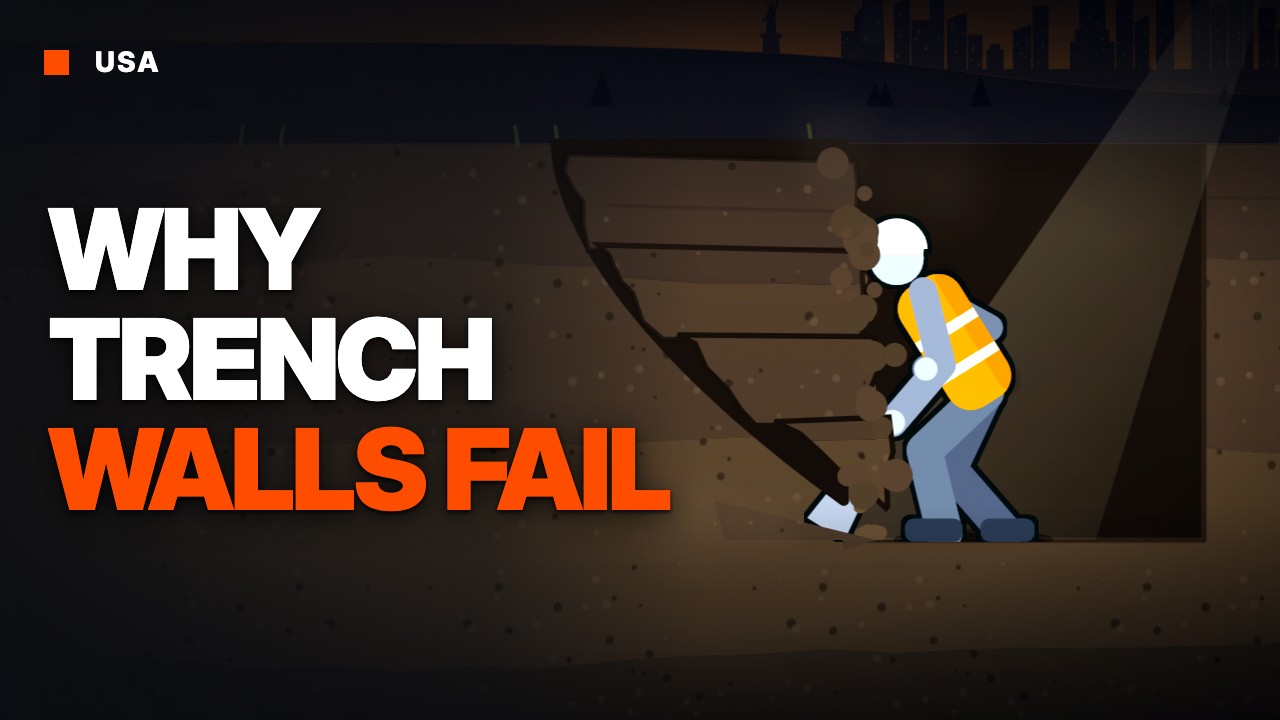
A cave-in is soil or rock suddenly falling or sliding into a trench, enough to trap or bury a worker, or injure them so they can't move. It can break from a wall, or run out from under a shield or support. Cave-ins are the main cause of trenching deaths. Trench deaths happen by suffocation or crushing when a worker is buried, and the falling soil can weigh as much as a mid-size car. Even a wall that looks stable can cave in if it isn't properly sloped, supported and regularly inspected. Nearly half of trench deaths are workers at small companies, with fewer than 10 people. Too often, people think small jobs don't need protection against collapse. A good habit: treat even a shallow trench, about waist deep, as able to trap and seriously injure you.
What Makes Walls Fail
Water is a common cause of cave-ins: rain, seepage, a high water table or a broken line. So are large loads, vibration, cracks and settling. Inadequate shoring, weather and soil that was dug before are common causes too.
Time, Vibration & Frozen Ground
Soil moisture starts changing as soon as a trench is dug, and that can weaken the walls. The longer a trench is open, the greater the risk of a cave-in, and one left open a long time can suddenly collapse for no clear reason. Vibration from traffic and equipment can also contribute to a collapse. A good habit: don't trust frozen ground. In a thaw, a hard frozen surface can sit over soft, wet soil. Judge the trench by the soil under the frost, not the crust.
What Your Dig Can Undermine
If your dig could endanger a nearby building, wall or other structure, the law requires shoring, bracing or underpinning to keep it stable. Digging below the base or footing of a foundation or retaining wall that could endanger workers is not allowed, unless it's supported, the dig is in stable rock, or a registered professional engineer has approved it. And sidewalks and pavement must not be undermined unless they are supported or otherwise protected. Best practice: before digging, look for poles, guy wires and anchors, trees, fences and anything else that could topple. Don't dig next to a pole or guy anchor until its owner has braced or held it. Stay out of the fall zone until the object is removed, secured or supported. Never cut a guy wire, and don't cut roots or anchors without clearance. Another good habit: if the ground suddenly drops, or you see signs of an old well, septic tank, cistern or other buried void, report it. Keep people and machines off the area until the competent person has assessed it.
Recap
To recap. Cave-ins are the main cause of trenching deaths. Nearly half of trench deaths happen at small companies. Water, loads, vibration, time and previously dug soil can all lead to a collapse. If your dig could endanger a nearby building or structure, it must be shored, braced or underpinned, and best practice is to check first for poles and anything else that could topple. And a good habit: treat even a waist-deep trench as able to trap you.
Sources
- US OSHA excavation standard (29 CFR 1926 Subpart P)
- NIOSH (CDC MMWR) analysis of US trenching and excavation deaths, 1992–2001
- IHSA Construction Health and Safety Manual and IHSA trenching guidance
- Dashpot recommended practice (said as such in the video)
This video is for work in the United States. It covers federal OSHA requirements and good practice, and the narration says which is which. States with their own OSHA-approved plans, and each state's 811 law, can set different or stricter rules. Rules also differ in Canada. General information only, not legal advice. Always follow federal and state regulations, your employer's procedures and the instructions of a competent person on your site. Narration is AI-generated (the Dashpot narrator voice); every script is checked against the sources listed above before it is voiced.
Dashpot checks that every worker on your crew understood the hazards and controls for the day's work. See how it works.