Chapters
Transcript
Intro
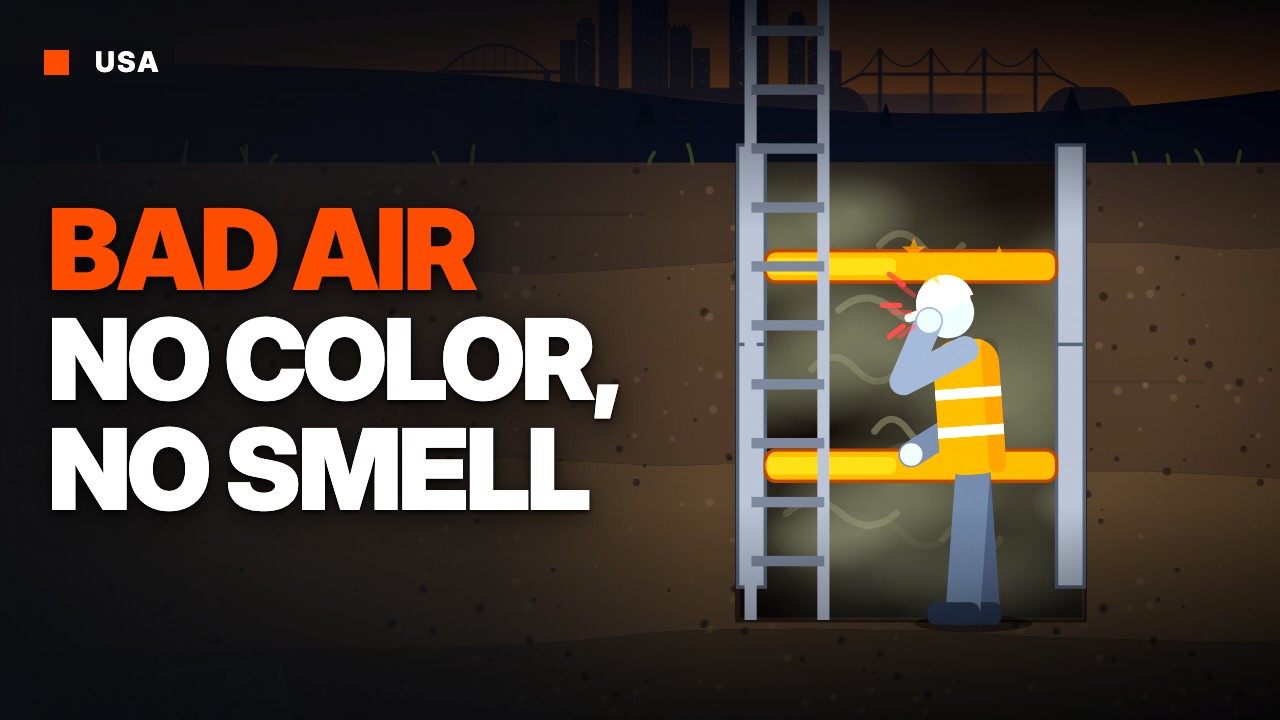
Could the air in this trench hurt you? Bad air means too little oxygen, or a gas or fume that can hurt you or explode. Some of these gases have no color and no smell. Breathing them can cause headaches, dizziness, nausea and confusion, and some can make you collapse, or kill you.
Where Bad Air Comes From
Hydrogen sulfide is heavier than air, and can build up to dangerous levels in low spots. Methane is lighter than air, and rises. It's wise to expect bad air from welding fumes, leaking underground tanks, waste disposal sites and landfill. Air can also run short of oxygen, when other gases push it out. Low oxygen can make you breathe fast and turn clumsy, and as it drops further, you can collapse, and die within minutes. A good habit: treat sewer work as bad-air work. Rotting sewage gives off hydrogen sulfide and methane, and its bacteria can use up the oxygen.
If the Air Is Bad
If the air has less than 19.5 percent oxygen, or could otherwise hurt a worker, precautions such as ventilation or proper respirators must keep workers from breathing it. And flammable gas must be kept below 20 percent of the lowest level at which it can ignite, for example by ventilating. Best practice: if the gas monitor alarms, get out, and stay out until the air is checked again. Never use pure oxygen to freshen the air; a dust mask or cartridge respirator gives you no oxygen. Below 19.5 percent oxygen, the law requires a full-facepiece respirator with its own air: a self-contained breathing apparatus, or supplied air with an escape bottle.
Engines in the Trench
It's wise to keep engines out of the trench, far enough back that their exhaust can't get in. Where an engine does run in the trench, make a habit of testing the air for carbon monoxide before anyone goes in and while they work. A good habit: if you use a fan, set its intake in clean air, away from engines.
Testing the Air
Where low oxygen or bad air could reasonably be expected, such as near a landfill or stored hazardous substances, the law requires testing the air before anyone enters a trench more than 4 feet deep. Where there's any chance of bad air, make a habit of testing from outside before anyone goes in, at several heights right down to the bottom, where propane and other heavy explosive gases collect. It's also wise to do a bump test or calibration check before each day's use, following the maker's instructions. And retest whenever things change.
Recap
To recap. Bad air is too little oxygen, or a gas or fume that can hurt you or explode. Its warning signs include headaches, dizziness, nausea, confusion, fast breathing and clumsiness. Where bad air could be present, test the air before anyone enters a trench over 4 feet deep, and make a habit of retesting when things change. Good habits: keep engines out of the trench, and test for carbon monoxide when one runs there. If the air is bad, ventilate or use proper respirators; for flammable gas, ventilate.
Sources
- US OSHA excavation standard (29 CFR 1926 Subpart P)
- US OSHA respiratory protection standard
- OSHA Safety and Health Information Bulletin: Calibrating and Testing Direct-Reading Portable Gas Monitors
- OSHA Carbon Monoxide Poisoning fact sheet
- OSHA Hydrogen Sulfide hazards guidance
- NIOSH Pocket Guide to Chemical Hazards
- CCOHS OSH Answers
- PubChem
- Dashpot recommended practice (said as such in the video)
This video is for work in the United States. It covers federal OSHA requirements and good practice, and the narration says which is which. States with their own OSHA-approved plans, and each state's 811 law, can set different or stricter rules. Rules also differ in Canada. General information only, not legal advice. Always follow federal and state regulations, your employer's procedures and the instructions of a competent person on your site. Narration is AI-generated (the Dashpot narrator voice); every script is checked against the sources listed above before it is voiced.
Dashpot checks that every worker on your crew understood the hazards and controls for the day's work. See how it works.