Chapters
Transcript
The Plan
If someone is hurt or buried in this trench, what is the plan? The time to answer that is before work starts. It's wise to have a written emergency plan for the site: who calls for help, how responders find the site, and what the crew should not do. Make sure the crew knows it. Make it a habit to practice the plan with your crew before it is needed.
People and Phones
Best practice: never work in a trench alone; keep another worker above ground, close to the trench or its way out. The employer must provide a way to get an injured worker to a doctor or hospital quickly, or a communication system to call an ambulance. Before you go in, it's wise to agree with the worker on top how you'll signal each other. Agree how often you'll check in. If you lose sight of each other or can't communicate, the safe habit is to stop work until contact is back.
If It Happens
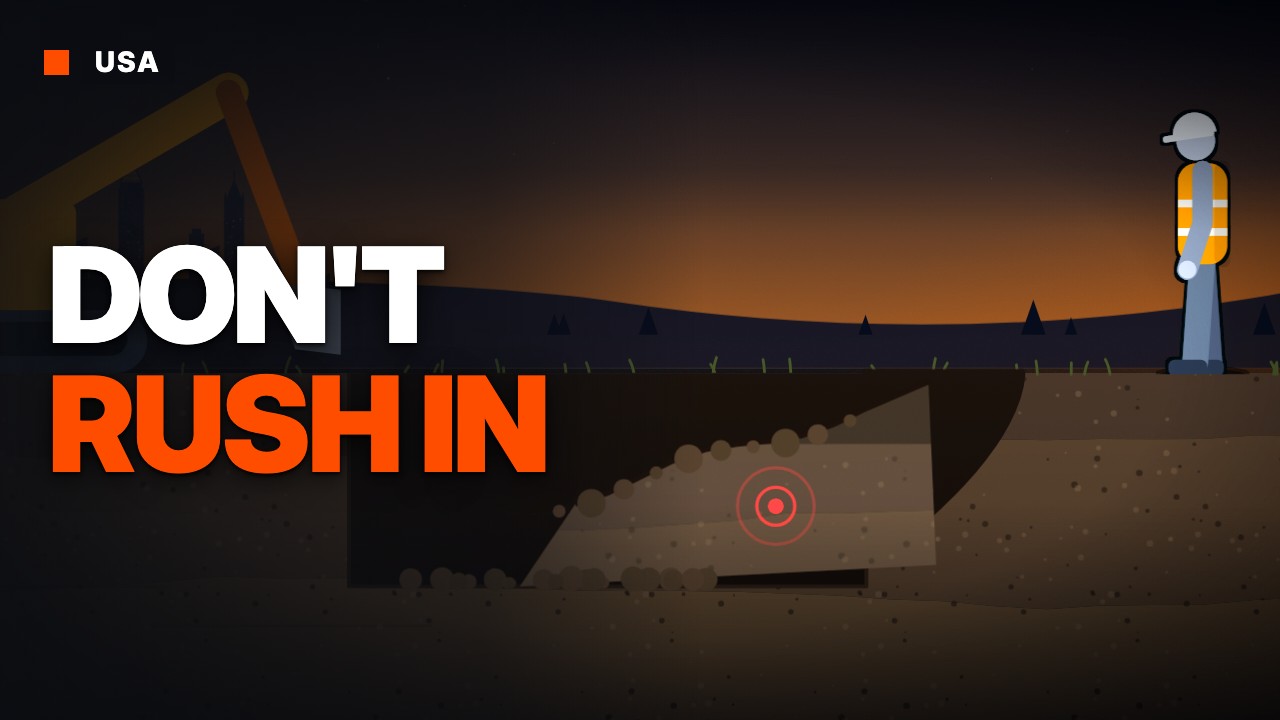
The safe move if someone is caught or buried: don't rush in. It is natural to want to rescue them. But rescuers can be killed by a further cave-in, or by other hazards. Instead, call 911, ask for trench rescue, and give the exact location. Have someone guide the responders in. Keep people and machines back from the edge. Shut down nearby equipment to stop vibration, and never dig with a machine near the buried worker. If a worker collapses where the air may be bad, the safe habit is not to go in, even holding your breath. Raise the alarm and keep others out.
Recap
To recap. A good habit: have a written emergency plan before work starts, and make sure the crew knows it. Practice it with the crew. Make a habit of never working in a trench alone: keep another worker above ground nearby. If someone is buried, the recommended steps are to call 911 for trench rescue, give the exact location, and not rush in.
Sources
- US OSHA construction standards: medical services and first aid
- IHSA Construction Health and Safety Manual and IHSA trenching guidance
- Dashpot recommended practice (said as such in the video)
This video is for work in the United States. It covers federal OSHA requirements and good practice, and the narration says which is which. States with their own OSHA-approved plans, and each state's 811 law, can set different or stricter rules. Rules also differ in Canada. General information only, not legal advice. Always follow federal and state regulations, your employer's procedures and the instructions of a competent person on your site. Narration is AI-generated (the Dashpot narrator voice); every script is checked against the sources listed above before it is voiced.
Dashpot checks that every worker on your crew understood the hazards and controls for the day's work. See how it works.