Chapters
Transcript
Intro
Shoring protects you only when it's the right system. Support must be installed in a way that protects workers from cave-ins, collapse and being struck by its parts. It must go in closely coordinated with the digging.
Setting Up & Moving the Box
Use and maintain the box the way its manufacturer recommends. Install it so dangerous movement is restricted if a sudden sideways load hits it. It pays to have it stick up at least 1 foot above the trench, so things at the edge can't fall in on you. In a trench up to 20 feet deep, with upper walls sloped to the standard tables and vertical lower walls, it must reach at least 18 inches above the vertical walls. Best practice when the box moves: never ride it or stand between it and the soil or pipe. Keep hands clear of pinch points while slack is taken up, and lift only by its lifting points. By law, nobody may be in the box while it's put in, taken out, or raised or lowered.
Staying Protected
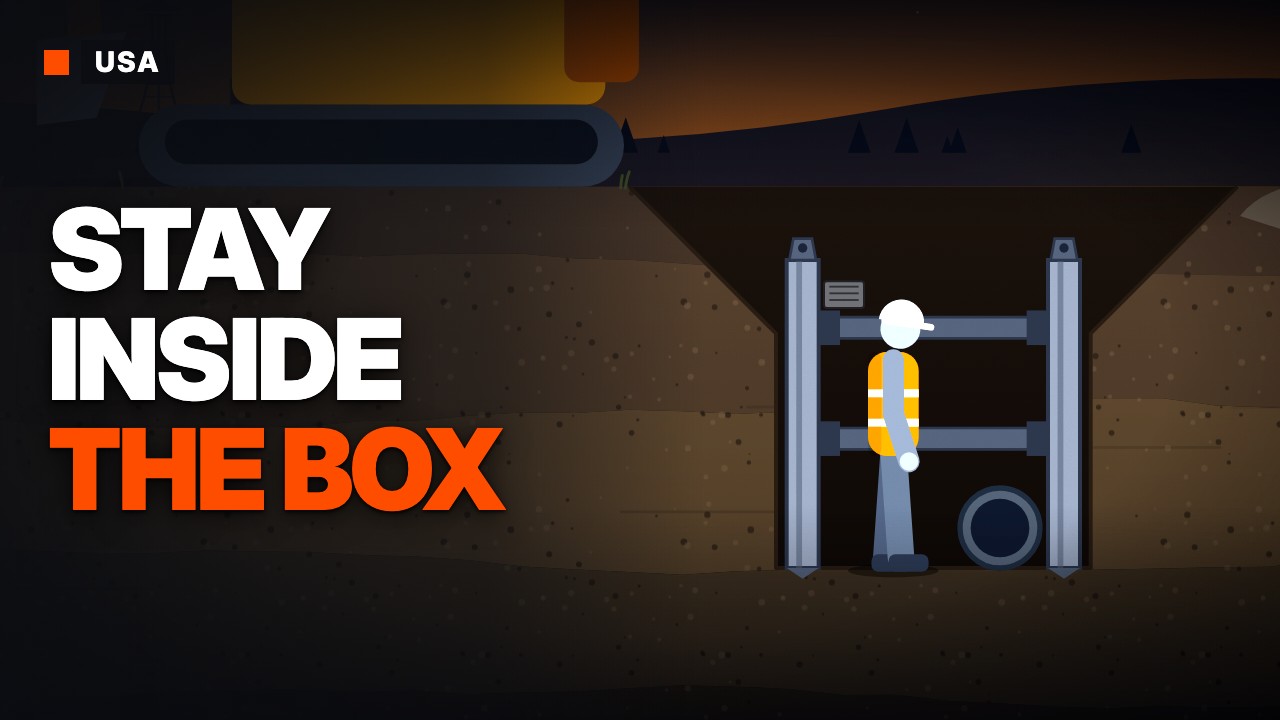
You must be protected from a cave-in while getting into or out of the box. A good habit: stay inside the box, even to measure, join pipe or grab a tool, and don't step past its ends into any part of the trench that isn't protected. A box protects the people inside it, and gives little or no support to the walls around it. You may dig no more than 2 feet below the bottom of the box or shoring, and only if it's designed for the full trench depth and there's no sign of soil coming from behind or under it.
Looking After the Shoring
Before a strut or brace is temporarily taken out, extra precautions must come first, such as other members to carry its load. A good habit: check hydraulic shoring for leaks, bent bases, cracked nipples and bent welds, and again after any hit. If a strut is bent, leaking, loose or losing pressure, get out and report it.
Putting It In & Taking It Out
Best practice: shoring goes in top down, and comes out bottom up. Get everyone out before any piece that holds a wall is pulled. Removal must start at the bottom, releasing members slowly to watch for signs of a cave-in, with backfilling keeping pace.
Recap
To recap. Use and maintain the trench box the way its manufacturer recommends. Support goes in together with the digging. It comes out from the bottom up, as you backfill. Make it a habit to stay inside the box while working, and never step past it into a part of the trench that isn't protected. And by law, you must be out of the box before it's put in, pulled out, lifted or lowered.
Sources
- US OSHA excavation standard (29 CFR 1926 Subpart P)
- Dashpot recommended practice (said as such in the video)
This video is for work in the United States. It covers federal OSHA requirements and good practice, and the narration says which is which. States with their own OSHA-approved plans, and each state's 811 law, can set different or stricter rules. Rules also differ in Canada. General information only, not legal advice. Always follow federal and state regulations, your employer's procedures and the instructions of a competent person on your site. Narration is AI-generated (the Dashpot narrator voice); every script is checked against the sources listed above before it is voiced.
Dashpot checks that every worker on your crew understood the hazards and controls for the day's work. See how it works.