Chapters
Transcript
Intro
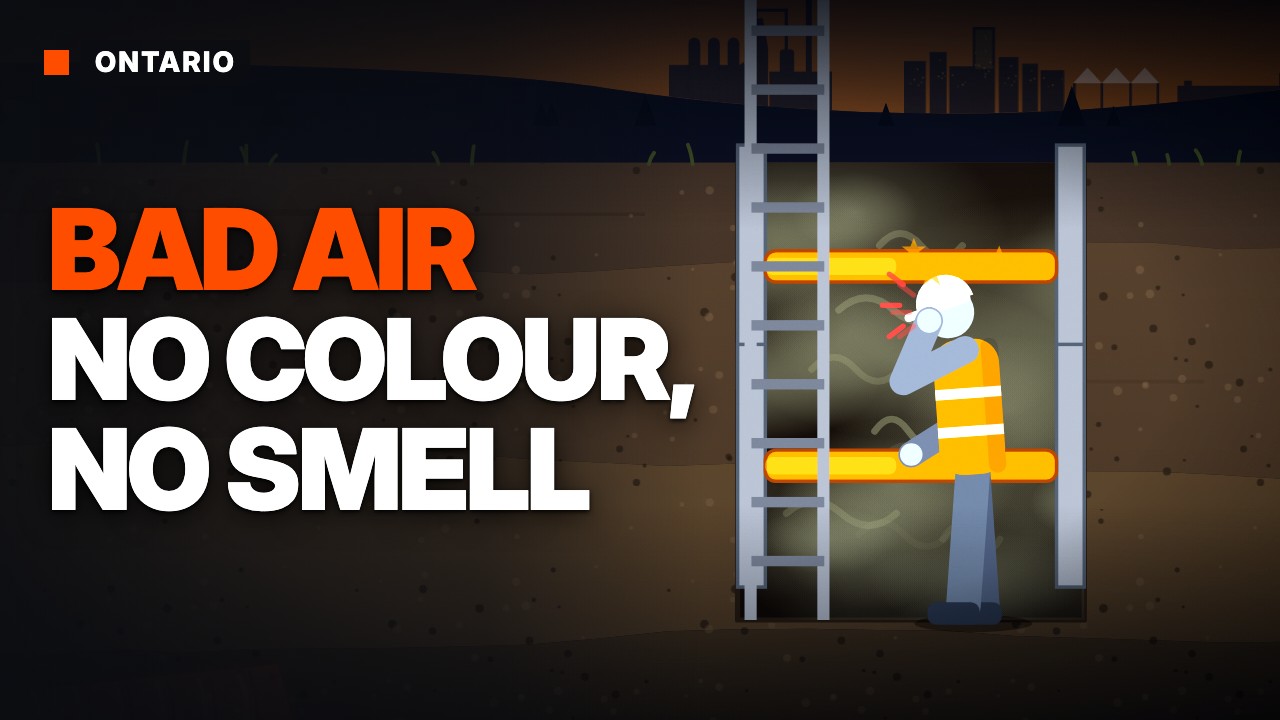
Could the air in this trench hurt you? Bad air means too little oxygen, or a gas or fume that can hurt you or explode. Some of these gases have no colour and no smell. Breathing them can cause headaches, dizziness, nausea and confusion, and some can make you collapse, or kill you.
Where Bad Air Comes From
Hydrogen sulphide is heavier than air, and can build up to dangerous levels in low spots. Methane is lighter than air, and rises. Expect bad air from welding fumes, leaking underground tanks, waste disposal sites and landfill. Air can also run short of oxygen, when other gases push it out. Low oxygen can make you breathe fast and turn clumsy, and as it drops further, you can collapse, and die within minutes. A good habit: treat sewer work as bad-air work. Rotting sewage gives off hydrogen sulphide and methane, and its bacteria can use up the oxygen.
If the Air Is Bad
If the air could hurt a worker or explode, the work must be ventilated. If ventilation isn't practicable for a breathing hazard, suitable respirators must be provided and used. A DANGER sign must be posted at the way in to any place that may have bad air. Best practice: if the gas monitor alarms, get out, and stay out until the air is checked again. Never use pure oxygen to freshen the air; a dust mask or cartridge respirator gives you no oxygen.
Engines in the Trench
It's wise to keep engines out of the trench, far enough back that their exhaust can't get in. Where an engine has to run in the trench, the law says it needs enough air to burn its fuel. And its exhaust must go far enough outside that it can't return, or be ventilated so it can't build up. While it runs, a competent worker must test the air for carbon monoxide. A good habit: if you use a fan, set its intake in clean air, away from engines.
Testing the Air
In any trench, the law requires a competent person to do the tests needed to find hazards. Where there's any chance of bad air, make a habit of testing from outside before anyone goes in, at several heights right down to the bottom, where propane and other heavy explosive gases collect. The recommended order: oxygen first, then flammable gases, then toxic gases. It's also wise to calibrate, including a bump test, just before each use. And retest whenever things change.
Recap
To recap. Bad air is too little oxygen, or a gas or fume that can hurt you or explode. Its warning signs include headaches, dizziness, nausea, confusion, fast breathing and clumsiness. Good habits: where bad air is possible, test first, in order, and retest when things change. Engines need enough air, and exhaust that can't return or build up. If the air is bad, ventilate; if you can't, use respirators.
Sources
- Ontario Regulation 213/91, Construction Projects
- IHSA Construction Health and Safety Manual and IHSA trenching guidance
- CCOHS OSH Answers
- NIOSH Pocket Guide to Chemical Hazards
- PubChem
- Dashpot recommended practice (said as such in the video)
This video is for work in Ontario, Canada. It covers Ontario requirements and good practice, and the narration says which is which. Rules differ in other provinces and in the US. General information only, not legal advice. Always follow the regulations, your employer's procedures and the instructions of a competent person on your site. Narration is AI-generated (the Dashpot narrator voice); every script is checked against the sources listed above before it is voiced.
Dashpot checks that every worker on your crew understood the hazards and controls for the day's work. See how it works.