Chapters
Transcript
Intro
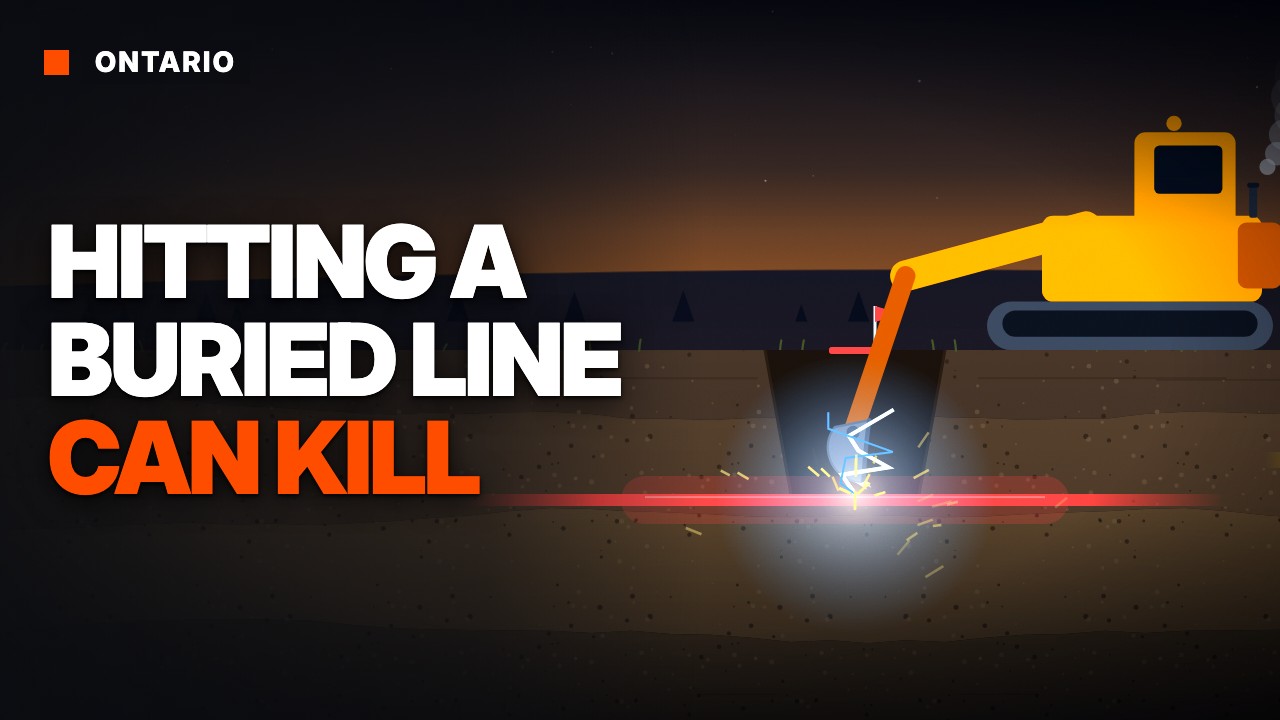
Hitting a buried line can be serious, even fatal. It can electrocute you, set off a gas explosion, or release a rush of water that washes out supports and causes a cave-in. By law, you must not dig in a way you know, or should know, would damage or interfere with a buried line.
Finding the Line
A locate shows roughly where a line is, so best practice is to treat it as accurate only to 1 metre either side of the mark, unless the locate gives other limits. Inside that zone, don't use a machine to expose the line. Dig by hand with a wooden or insulated shovel handle, or use hydrovac if the utility agreed in advance. Don't use picks, bars or stakes. It pays to pry the soil away gently and dig alongside the line, not down onto it. The recommended way to find the line is with test holes, dug until you can see it. If your dig runs alongside the line inside its zone, the same advice applies: test holes along the whole route, no more than 4.5 metres apart, with more where the utility shows a change in direction or depth. Still can't find it? It's wise to call the utility for help.
Once the Line Is Found
Once test holes have found the line, machines can dig in that area, but the excavation guideline from Ontario's electrical and gas safety authorities is firm: no machine within 0.3 metres of the line, in any direction. Dig that last 0.3 metres by hand. Within 1 metre, run the machine parallel to the line wherever possible.
Surprises in the Ground
A good habit: treat every line as live, unless the utility says otherwise on the locate. Did you find a line in the locate area the utility didn't identify? Never assume it's abandoned. Call the utility right away. The same goes for anything you can't identify, like a drum, tank, concrete encasement or unknown pipe: stop digging near it, keep people back, and have it identified before you go on. And if you see stained soil or an oily sheen, or smell something unusual, the habit is the same: stop digging and report it.
Recap
To recap. Good habits to keep: no machines to expose a line within 1 metre of the mark, or the locate's own limits; hand dig, or hydrovac if the utility agreed. Find the line with test holes, no more than 4.5 metres apart when you dig alongside it and closer where it bends or changes depth, then keep machines 0.3 metres away from it on every side and dig that part by hand. Treat every line as live unless the utility says otherwise, call about any line it didn't mark, and stop and keep people back from anything you can't identify.
Sources
- Ontario Underground Infrastructure Notification System Act, 2012
- ESA/TSSA Guideline for Excavating in the Vicinity of Utility Lines
- IHSA Construction Health and Safety Manual and IHSA trenching guidance
- Dashpot recommended practice (said as such in the video)
This video is for work in Ontario, Canada. It covers Ontario requirements and good practice, and the narration says which is which. Rules differ in other provinces and in the US. General information only, not legal advice. Always follow the regulations, your employer's procedures and the instructions of a competent person on your site. Narration is AI-generated (the Dashpot narrator voice); every script is checked against the sources listed above before it is voiced.
Dashpot checks that every worker on your crew understood the hazards and controls for the day's work. See how it works.